
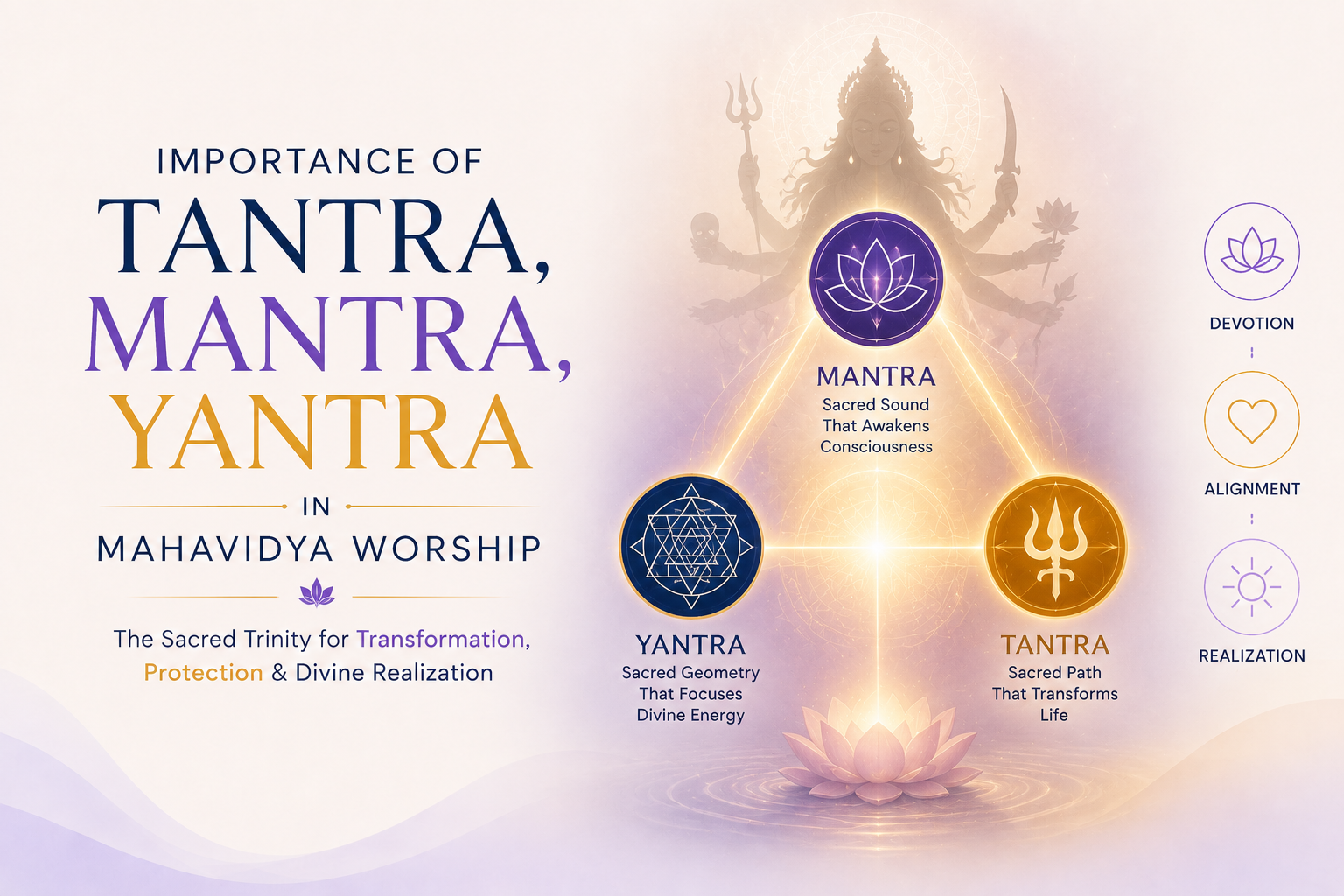
Mahavidya worship includes tantra, mantra, and yantra together. Tantra gives the method, mantra gives the sound, and yantra gives the shape. Mahavidya worship is done with sound, form, and inner discipline. Together, they create a path where devotion becomes living experience and inner life begins to change from within.
Tantra as a Way of Connection
Tantra is a method of direct connection. It brings body, breath, attention, and feeling into one stream. In Mahavidya worship, tantra is the path that holds the practice together. It turns worship into lived awareness. Every action, when offered with care, becomes part of the meeting with the Divine Mother.
Tantra also gives depth to devotion. It treats life as a field of energy and meaning. The mind, the breath, the body, and the heart all take part. The seeker starts sensing that the goddess lives in experience itself, in thought, silence, and movement.
Mantra as Mind Instrument
Mantra is the instrument that shapes the mind. Repeated sound gives the mind a single path to follow. This softens inner noise and gathers scattered attention. The sound enters awareness again and again, and that repetition builds a new inner rhythm.
At first, mantra feels like an uttered prayer. Later, it becomes a presence. The sound seems to live inside the chest, behind the eyes, and deep in memory. This is how mantra changes consciousness. It does not only speak to the ear. It reaches the deeper layers of mind and feeling.
Yantra as Sacred Geometry
Yantra is the visible face of the goddess. It is geometry filled with meaning. Circles, triangles, lotuses, and the central point are not random shapes. They guide awareness from the outer world toward the inner centre.
A yantra teaches concentration through form. The eye follows the lines. The mind follows the eye. Slowly, attention gathers. In that gathering, stillness appears. Yantra becomes a mirror for consciousness, showing how order lives beneath appearance.
How Consciousness Changes
Tantra, mantra, and yantra work together to shift consciousness. Tantra gives the frame. Mantra gives the vibration. Yantra gives the vision. The combined effect is powerful because the whole human being joins the practice.
- Consciousness begins to feel less scattered.
- Thought becomes more disciplined.
- Reaction loosens its grip.
- Attention grows steady.
- Devotion deepens.
The seeker starts seeing life with more clarity and more tenderness. This change feels natural. It is like a lamp being lit inside a quiet room. The room stays the same, yet everything becomes visible in a new way.
Devotion and the Subconscious
The subconscious mind responds strongly to repetition and symbol. Mahavidya worship reaches that level through mantra and yantra. Repeated sound leaves an inner trace. Repeated form leaves an inner image. Repeated devotion leaves an inner mood.
This is why the practice feels so alive. The subconscious begins to receive new impressions. Old habits start losing strength. New patterns of trust, courage, and inner order begin to rise. The deeper mind slowly learns a different language.
The Mahavidyas carry strong symbols because consciousness learns through image. Each symbol opens a different inner door. Together, they show the full field of Shakti. The forms may seem different, yet all of them point to one living power moving through creation and consciousness.
Power in Mahavidya worship is inward power. It is the strength to remain centred. It is the grace to see clearly. It is the ability to move with life while staying rooted in the divine source.
Transformation begins when inner energy becomes aligned. The mind stops running in every direction. Speech becomes more careful. Desire becomes more refined. Silence becomes friendlier. A deeper order starts showing itself in ordinary life.
Tantra supports this change through method. Mantra supports it through sound. Yantra supports it through vision. Together they create a path where the seeker does more than believe. The seeker starts to embody the truth.
Mahavidya worship becomes powerful when tantra, mantra, and yantra move together. The method gives direction, the sound gives depth, and the form gives focus. Through this union, consciousness begins to change, devotion grows deeper, and the seeker moves closer to the living presence of Shakti.