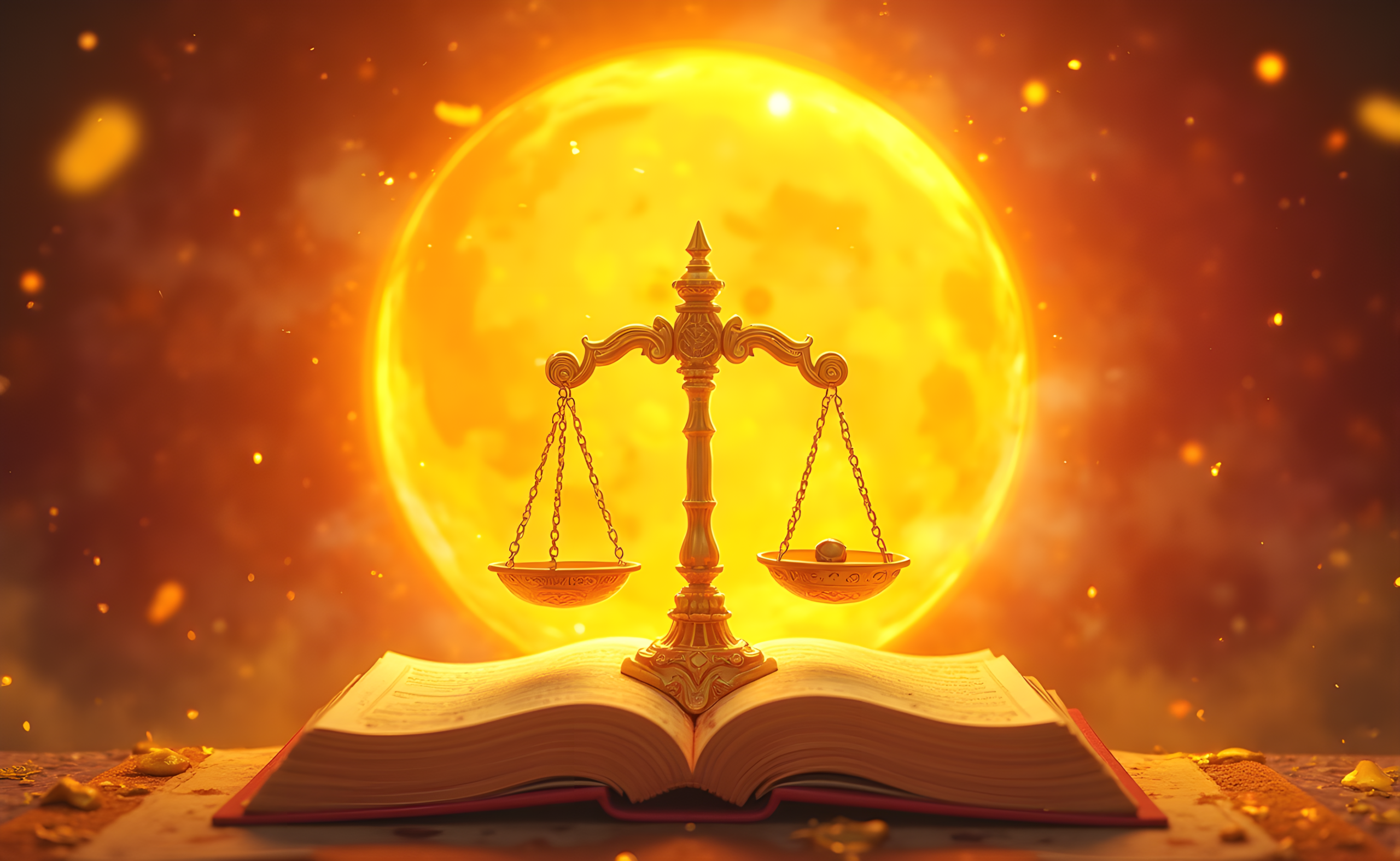
Astrology, particularly Vedic Jyotish, defines human experience through the philosophical lens of karma, dharma, and cosmic time. It teaches that planetary positions at birth reflect a soul’s unfinished journey across lifetimes.
Jyotish: Light on the Path
The word Jyotish comes from jyoti, meaning light. The ancient rishis called it the eye of the Vedas. That framing alone tells you something.
Vedic astrology rests on a simple philosophical belief: every human being carries three inseparable dimensions, a body, a mind, and a soul. The body wears out. The mind wanders. But the soul, rooted in Paramatma, the supreme consciousness, cannot be destroyed. This is not poetic language. For the system of Jyotish, it is a working premise. The birth chart is understood as a record of the soul’s karmic residue from previous lives, arriving again in a new body to complete what remains unfinished.
When you understand this, astrology stops being about “Will I get a promotion this year?” and becomes something far more personal. It becomes the question: Why am I here, and what am I carrying?
Karma as the Architecture
Karma and astrology, in the Vedic tradition, are inseparable. Personal karma from previous lifetimes shapes the circumstances of this one. Planetary positions at the time of birth are considered a direct expression of that karma, a cosmic timestamp of sorts, recording what the soul has earned and what it still owes.
This is where the philosophy deepens in a way that Western astrology rarely touches. The Vedic system organizes human life around four Purusharthas: Dharma, Artha, Kama, and Moksha. Every house in a birth chart, every planetary placement, maps onto these four domains of living. A chart is not simply reading your personality. It is reading the shape of your human journey across all four dimensions, what you are here to do, earn, desire, and ultimately release.
Free Will and Choice
Spend enough time with astrology and you will hit this wall: if the planets show what is coming, where does my choice go?
Jyotish has a clear answer. Fate and free will coexist. Fate, prarabdha karma, creates the situations, the circumstances, the terrain of your life. Free will is how you respond to that terrain. The response creates new karma. That new karma shapes the next terrain. So the chart is not a sentence. It is a context.
This is a philosophically mature position. It mirrors what many Indian philosophers, from Shankaracharya to Sri Aurobindo, have said in different words. We are shaped by what has come before, but we are also the shapers of what comes next.
Human Nature in the Chart
Planetary alignments at birth shape inclinations, how a person thinks, responds, grows, and moves through life’s phases. This is a subtler claim than most people engage with. The planets do not create your personality. They reflect tendencies already present in the soul’s accumulated experience.
A strong Jupiter in the chart suggests a person with philosophical depth, a love for learning, a natural generosity. But that same energy can express as genuine wisdom or as self-righteous moralizing. The difference lies in awareness and intention. The philosophy of Jyotish says the Shadripus, the six weaknesses of ego, anger, greed, attachment, pride, and jealousy, are present in every human being at birth. The chart shows which ones pull strongest, where the friction lives. Growth means loosening their grip, lifetime by lifetime.
Cosmos and Self
The ancient Vedic view was that the universe and the individual are part of one continuous reality. Yatha pinde tatha brahmande, as is the individual body, so is the cosmic body. It is the philosophical ground on which all of Jyotish rests.
The movement of planets is not causing your life events. The same intelligence that moves the planets also moves through your life. Both are expressions of Ishvara, the divine order. So when an astrologer reads a transit, they are reading the rhythm of that divine order as it touches the specific pattern of your life. It is like two waves in the same ocean, moving together.
The human experience, with all its joy, confusion, loss, love, and searching, is described in this system as the soul’s movement toward clarity. Suffering is part of the curriculum. Desire is the engine. Relationships are the laboratory. And Moksha, liberation from the cycle, is the final examination.
What the Chart Cannot Show
The chart shows patterns. It reflects tendencies, cycles, and karmic signatures. What it cannot show is the quality of your attention, how present you are to your own life, how honest you are with yourself, how willing you are to look at what is uncomfortable.
The greatest astrologers have always said this in different ways. Jyotish points toward the path. Walking it is a different matter entirely. The chart may say a person carries gifts for healing, teaching, or leadership.
Astrology defines the philosophy of human experience by offering a framework in which nothing is wasted. Every hardship is karmic material. Every relationship is a mirror. Every planetary period is a chapter in a story that the soul itself authored across time.
It is a letter from your own past, arriving now, asking you to read it carefully.
FAQ Section
Q1. What is the connection between astrology and philosophy?
Vedic astrology is grounded in Indian philosophy, especially the concepts of karma, dharma, and the soul’s journey across lifetimes. It uses planetary positions as a language to understand the deeper purpose behind human experience.
Q2. Does Vedic astrology believe in free will?
Yes. Jyotish teaches that fate creates the circumstances of life, while free will determines how a person responds. That response generates new karma, shaping future situations. Free will and destiny work together, not against each other.
Q3. What are the four goals of human life according to Vedic astrology?
The four Purusharthas are Dharma, Artha, Kama, and Moksha. Dharma means righteous living, Artha means meaningful work and wealth, Kama means desires and relationships, and Moksha means spiritual liberation. Each house in a birth chart connects to one of these dimensions.
Q4. What does a birth chart actually represent in Jyotish?
A birth chart in Jyotish represents the karmic configuration of the soul at the moment of birth, reflecting unfinished karma from past lives, natural tendencies, strengths, and the spiritual lessons this lifetime holds.
Q5. How does astrology relate to karma and reincarnation?
The Vedic tradition holds that karma from previous lifetimes shapes the circumstances of each new birth. Planetary positions at birth are considered a direct reflection of that accumulated karma, and the chart maps the key areas where karmic growth is expected to occur.
Q6. Can astrology help with spiritual growth?
The original purpose of Jyotish was spiritual guidance, not prediction. Understanding one’s planetary patterns can illuminate psychological tendencies, karmic patterns, and the specific life areas calling for deeper awareness and transformation.